If you’re heading for a desert safari, eat something light, balanced, and easy to digest before you go.
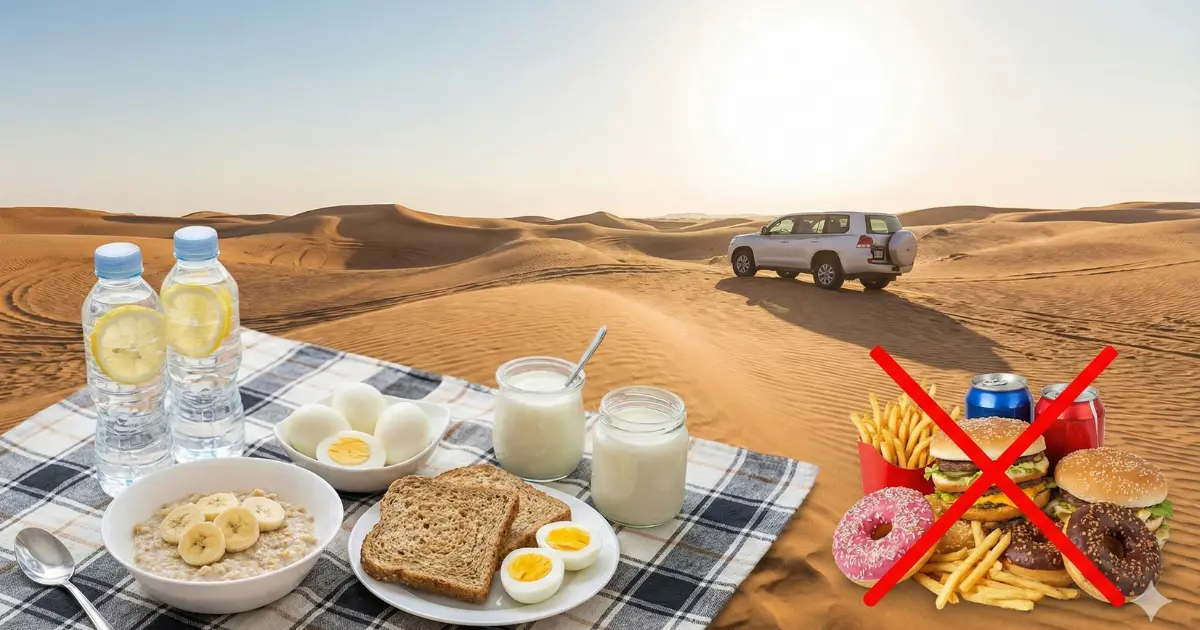
The best pre-safari meal includes light proteins (like eggs or yogurt), complex carbs (like oats or whole-grain toast), and hydration-rich fruits (like bananas or oranges). These foods keep your energy steady without making you feel heavy or queasy during dune bashing.
Avoid greasy, spicy, or very sweet foods; they can trigger motion sickness or discomfort in the desert heat. Timing also matters: eat 1 to 2 hours before your safari so your food has time to digest properly.
In this article, we’ll explain why your food choices matter, which meals to skip, the best time to eat, and tips for families or kids to stay comfortable and ready for adventure.
Why Your Pre-Safari Meal Matters
Many travelers don’t realize that what you eat before your desert safari can make or break your experience. Some people even arrive on an empty stomach, thinking it will help avoid motion sickness, but that often makes things worse.
When you skip food, your energy drops, your blood sugar dips, and you may start feeling lightheaded or nauseous during dune bashing. On the other hand, eating heavy or oily food can slow digestion and make the bumpy ride uncomfortable.
A light, balanced meal helps your body stay energized, hydrated, and calm throughout the safari. It keeps your stomach settled and your focus sharp and ensures that you can fully enjoy every moment, from the thrilling dunes to the relaxing desert camp.
Eating smart before your safari means feeling good, staying active, and making the most of your desert adventure, especially if you’re traveling with family or kids.
Best Foods to Eat Before a Safari
Choosing the right meal before your desert safari makes a big difference. The right foods give you steady energy, prevent motion sickness, and keep you comfortable during the bumpy dune rides.
Here’s what to eat, and why it works.
1. Complex Carbs—For Long-Lasting Energy
What to Eat:
Oatmeal, whole-grain toast, or a banana.
Why It’s Best:
These foods release energy slowly, keeping you active throughout the safari. They’re light on the stomach and won’t cause bloating or discomfort during dune bashing.
2. Light Proteins—For Stomach Comfort
What to Eat:
Boiled eggs, yogurt, a handful of nuts, or grilled chicken.
Why It’s Best:
Protein keeps you full and steady without making you feel heavy. It also helps maintain focus and energy, especially for morning or afternoon safaris.
3. Hydration Helpers—To Prevent Dizziness
What to Drink:
Plain water, coconut water, or mild herbal tea.
Why It’s Best:
Proper hydration prevents dehydration and lightheadedness. Avoid carbonated or sugary drinks; they can lead to bloating and make motion sickness worse.
4. Ginger and Citrus—To Control Nausea
What to Try:
Ginger tea, ginger candies, or lemon water.
Why It’s Best:
Both ginger and citrus are natural remedies for nausea. They calm your stomach and help prevent motion sickness.
Trawey Tip:
Eat your meal about 1–1.5 hours before the safari. A light, balanced combination of carbs, protein, and hydration is the best way to prepare your body for the adventure ahead.
Foods and Drinks to Avoid Before a Desert Safari
What you don’t eat before your safari is just as important as what you do. Some foods can upset your stomach, trigger nausea, or make you feel sluggish during the ride. Here’s what to avoid and why.
1. Greasy or Fried Foods
Examples: Fries, burgers, pastries, or heavy curries.
Why to Avoid: These foods take longer to digest and can cause bloating or nausea when the vehicle moves over the dunes.
2. Spicy Dishes
Examples: hot sauces, chili-based meals, or spicy snacks.
Why to Avoid: Spices can irritate the stomach lining, especially on an empty stomach, increasing the risk of heartburn or discomfort during the ride.
3. Excess Sugar and Caffeine
Examples: energy drinks, sweet sodas, or strong coffee.
Why to Avoid: These can lead to a quick energy spike followed by a crash, making you feel tired or uneasy. Caffeine also dehydrates the body, which is not ideal in desert heat.
4. Too Much Dairy
Examples: Milkshakes, creamy lattes, or cheese-heavy meals.
Why to Avoid: Dairy can be hard to digest for some people and may cause bloating or nausea during motion.
5. Alcohol
Why to Avoid: Alcohol can cause dehydration, lower energy, and make motion sickness worse. It’s best to stay fully hydrated and alert for the safari.
Trawey Tip:
Stick to light, simple meals with fresh ingredients. The goal is to feel energized, calm, and comfortable before heading out for your desert adventure.
Timing Your Pre-Safari Meal
When it comes to your pre-safari meal, timing is everything. Eating at the right time helps your body digest properly, keeps your energy steady, and prevents any discomfort during dune bashing.
When to Eat
- Eat 1–2 hours before your safari.
This gives your body enough time to digest and convert food into energy before the ride. - If you’re joining an early morning safari, have a light, balanced breakfast before leaving your hotel.
- Avoid going on an empty stomach, as that can make you dizzy or weak during the activity.
What you eat before your desert safari can make a big difference in how much you enjoy it. A light, balanced meal with healthy carbs, gentle proteins, and plenty of fluids helps you stay energized and comfortable.
Avoid heavy, greasy, or spicy foods that can cause nausea, and make sure to eat at least 1–2 hours before your ride for proper digestion.
With a little preparation, you can prevent motion sickness, stay hydrated, and make the most of every moment in the dunes.
Book your Dubai desert safari with Trawey Tours today and enjoy a comfortable and safe safari.